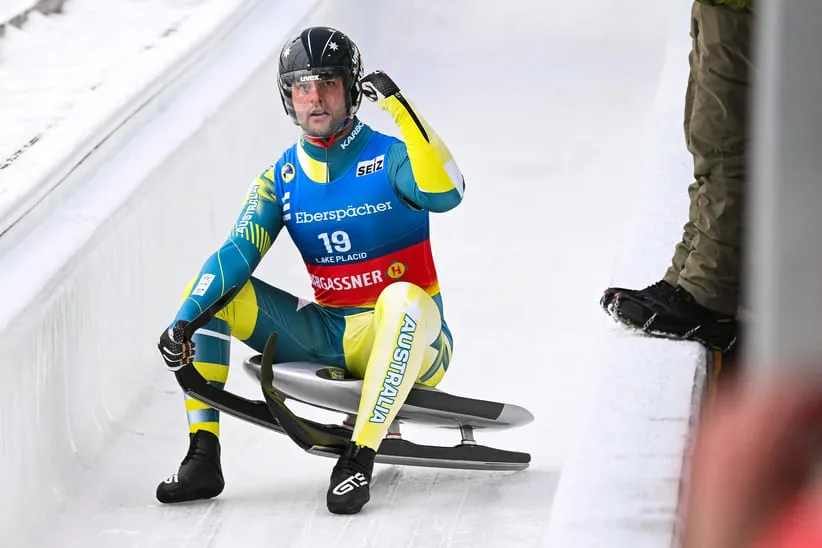
When the torch rises over Milano Cortina for the 2026 Winter Games, American fans may notice a familiar streak of speed on the luge track. The connection isn’t accidental. NASCAR and USA Luge have entered into a new technical and marketing partnership that brings stock‑car engineering to Olympic sliding sports.
It’s an unlikely pairing on the surface, but beneath it lies a shared obsession: finding speed where others can’t. This isn’t a simple branding exercise. It’s a genuine exchange of engineering philosophies, with one clear objective to build the fastest sleds in the world.
Engineering Speed in the Wind Tunnel
At the heart of the partnership is aerodynamics. In NASCAR, airflow is everything. It determines whether a car contends for a championship or fades into the middle of the pack. Dr. Eric Jacuzzi, NASCAR’s vice president of vehicle performance, is leading the technical effort. His team spends every day wrestling with drag, downforce, and turbulent air. Now they’re applying that same expertise to sleds that rely solely on gravity.
USA Luge will have access to aerodynamic tools and resources normally reserved for the top levels of motorsports. Engineers who tune Cup Series cars for Daytona are now helping American athletes cut through the air in Lake Placid and, soon, Italy. It’s a rare opportunity for a winter sport to tap into a motorsports R&D pipeline.
USA Luge CEO Scott Riewald said the partnership feels natural. Both organizations operate in a high‑speed problem‑solving environment, where fabrication, materials science, and precision engineering drive success. By blending luge expertise with NASCAR’s technical muscle, the hope is to uncover the fractions of a second that separate medalists from the rest of the field.
A Legacy of Winter Gold
This isn’t the first time American racing has crossed over into winter sports. The roots of this relationship stretch back more than three decades to Geoff Bodine, one of NASCAR’s most respected figures. Bodine, named one of NASCAR’s 75 Greatest Drivers, watched the U.S. bobsled program struggle with outdated equipment in the early 1990s. Instead of shrugging it off, he stepped in.
He launched the Bo‑Dyn Bobsled Project, using his racing connections and engineering background to design American‑made sleds. Bodine brought a race‑shop mentality to a sport that had long relied on foreign technology. The impact was immediate, but the defining moment came in 2010.
At the Vancouver Games, the Bo‑Dyn‑built “Night Train” sled delivered the United States its first four‑man bobsled gold medal in 62 years. It was a landmark moment, a victory born from racing ingenuity. Bodine’s contributions eventually earned him a place in the USA Bobsled & Skeleton Hall of Fame.
The new NASCAR–USA Luge partnership feels like a continuation of that legacy. It reinforces the idea that American racing technology isn’t just competitive, and it’s world‑class, no matter the surface.
Marketing the Need for Speed
While engineers work in the wind tunnel, the marketing teams are building a bridge between two fan bases that rarely intersect. The partnership includes NASCAR‑branded content on NBC Sports, athlete appearances at race weekends, and branding on USA Luge athlete wear.
Expect to see luge athletes visiting tracks and NASCAR drivers getting a firsthand look at the start ramp. It’s a natural storyline: the summer speed of the Cup Series meeting the winter intensity of the Olympics. USA Luge’s headquarters in Lake Placid will also feature NASCAR branding, giving the partnership a physical presence beyond the broadcast booth.
What This Means for NASCAR
For NASCAR, this partnership marks a shift in how the sport presents its own technology. Stock‑car racing has long been dismissed by outsiders as low‑tech, a perception that hasn’t matched reality for years. By partnering with an Olympic governing body to provide aerodynamic expertise, NASCAR is showcasing its engineering capabilities.
It’s a validation of the work underway in the Research & Development Center. If the technology that keeps a Cup car stable at 200 mph helps deliver a gold medal in luge, it proves that NASCAR’s science has applications far beyond the oval. There’s also a patriotic element. NASCAR has always been deeply tied to American culture.
Aligning with Team USA ahead of the Winter Games strengthens the organization’s identity on the international stage. It gives race fans a reason to tune into the Olympics with a new sense of ownership, and they’re not just cheering for their country. They’re cheering for their sport’s fingerprints on the sled.
What’s Next
The 2026 Winter Games open on February 6, just weeks before the Daytona 500. It’s a rare moment when two very different worlds of speed collide on the calendar. When American luge athletes settle onto their sleds in Italy, they’ll be riding on technology shaped by the same minds who build race‑winning stock cars.
From Geoff Bodine’s bobsled revolution in 2010 to NASCAR’s aerodynamic influence in 2026, the story hasn’t changed. Racers chase speed wherever they find it, and when NASCAR engineers get involved, speed usually follows.