

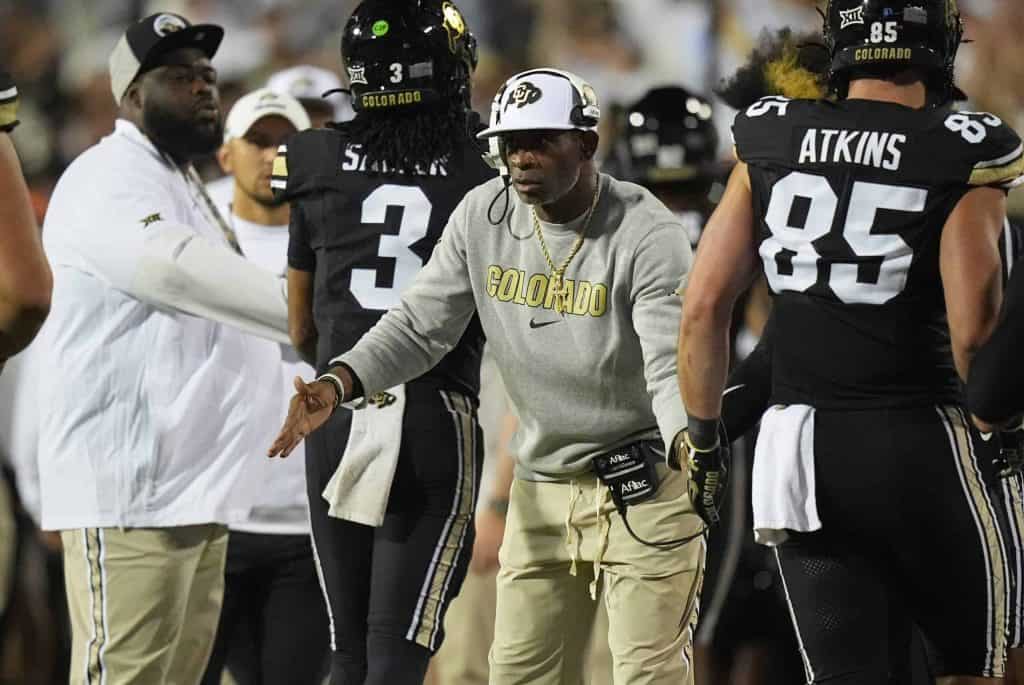
The Colorado Buffaloes’ athletic department is facing a significant financial challenge, projecting a $27 million budget deficit for the fiscal year ending in June. This substantial shortfall comes as the university makes major investments in its football program, including a lucrative contract for head coach Deion Sanders and increased spending on player benefits.
The High Cost of Competing For The Colorado Buffaloes
According to a report from USA Today, the projected deficit is the largest the department has ever reported. The financial strain is driven by a surge in expenses, with football-related costs alone accounting for $60.4 million of the department’s $163.7 million total outlay.
Several key factors are contributing to the budget gap:
- Deion Sanders’ Contract: In March, Coach Sanders signed a contract extension that raises his annual pay to over $10 million, a significant investment aimed at elevating the program’s national profile.
- NIL and Player Payouts: The university has committed up to $20.5 million annually for player benefits and direct payments as part of the new landscape of college athletics.
- Subpar On-Field Performance: After a promising 9-win season in 2024, the Buffaloes took a step back in 2025, finishing with a 3-9 record. The lack of on-field success has intensified scrutiny of the program’s spending.
Navigating the Financial Fallout
The athletic department is reportedly exploring ways to mitigate the deficit before the end of the fiscal year. Strategies include increasing revenue from donations, securing new sponsorships, and hosting concerts at Folsom Field. However, the department may still require over $41 million in subsidies from the university to cover its financial obligations.
The situation highlights the high-stakes financial gamble that universities are taking in the modern era of college football. While the hiring of Deion Sanders brought unprecedented attention and initial success, the associated costs are proving to be substantial. The athletic department is now tasked with finding a sustainable financial path forward while navigating the pressures of competing at the highest level.
Complicating matters is Sanders’ large buyout clause of $33.6 million, which makes a coaching change an financially unviable option. The university is heavily invested in the “Coach Prime” era and now needs the on-field results—and the revenue that follows—to start justifying the massive expenditures.