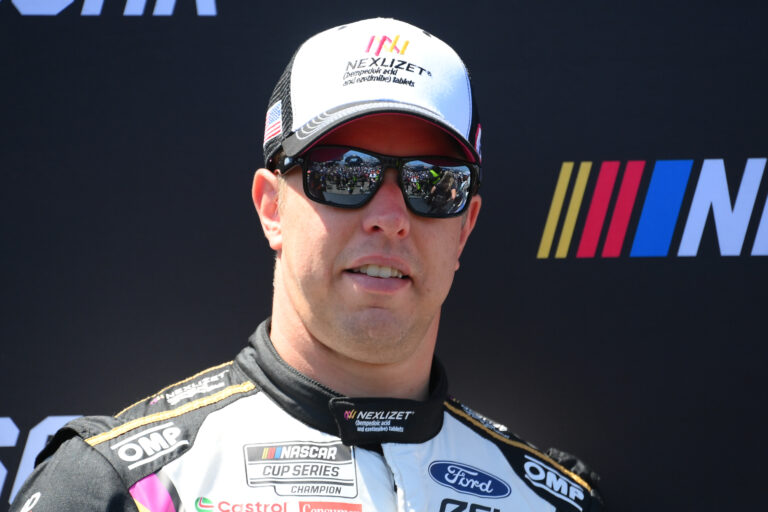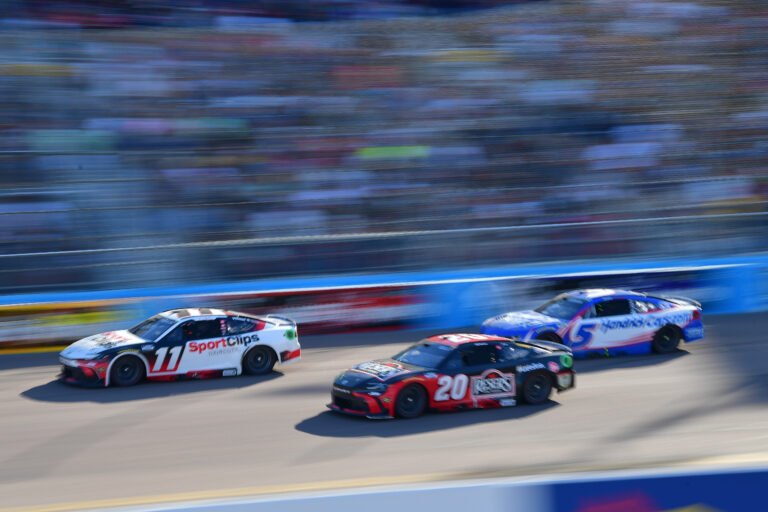

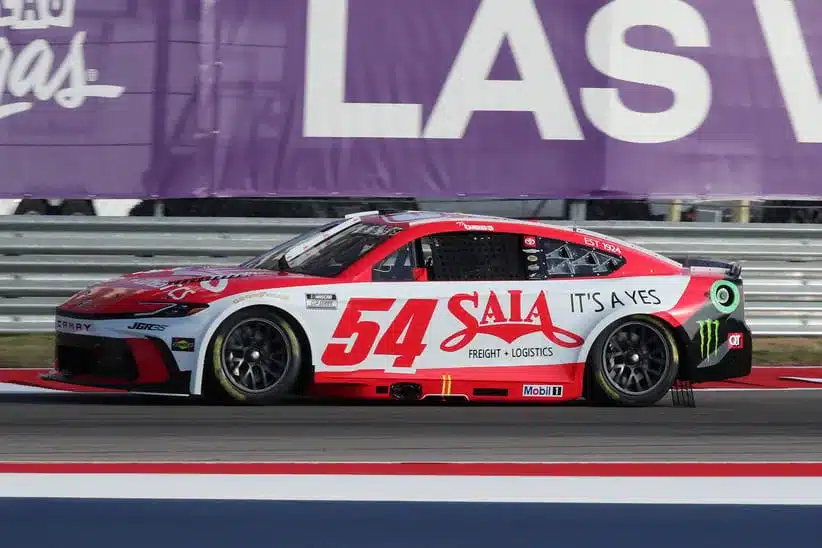
Ty Gibbs turns Stage 2 at COTA into a statement run, taking advantage of a shifting pit cycle and a chaotic middle portion of the race to put the No. 54 out front when it counts. What unfolds isn’t a raw‑speed takeover but a calculated strike one built on timing, execution, and the ability to stay composed while the rest of the field scrambles to sort out strategy on one of NASCAR’s most unforgiving road courses.
Gibbs Capitalizes As The Field Splits On Strategy
Stage 2 becomes a moving target the moment teams begin committing to their pit windows. Some stretch their fuel runs to protect track position, others short‑pit in hopes of gaining time on fresh tires, and the order reshuffles lap after lap.
COTA’s long layout magnifies every decision: pit too early, and you risk falling into traffic, pit too late, and you surrender grip when the field is pushing hardest. Gibbs and his crew land on the perfect middle ground. Their stop comes at a moment when the cycle is fractured, and once the sequence completes, the No. 54 emerges with clean air and a clear path.
From there, Gibbs settles into a rhythm through the esses, nails his braking zones, and avoids the small mistakes that can erase a lead in seconds. The stage win becomes a product of discipline and an ability to maximize a strategic advantage without overdriving the car.
A Flashpoint At Turn 1 Raises The Temperature
The stage isn’t defined by strategy alone. A restart early in the run produces one of the day’s most scrutinized moments when Daniel Suárez makes contact with rookie Carson Zilisch entering Turn 1.
The bump sends Zilisch spinning, stacking up the field behind them and drawing immediate attention from spotters and fans. Replays confirm the contact, and the incident becomes a talking point as Zilisch, who had shown legitimate pace, drops valuable positions and loses out on potential stage points.
The moment adds tension to a stage already shaped by risk‑reward decisions. At a track where the opening corner funnels the field into a single line, even slight misjudgments carry heavy consequences.
A Win With Playoff Implications
Gibbs’ Stage 2 victory delivers more than track position. The playoff point he collects strengthens his early‑season foundation and signals that his team is willing to make aggressive, race‑shaping calls. It also reinforces a broader truth about modern road‑course racing: strategy is no longer secondary.
The teams that treat pit road like a chessboard are the ones consistently finding themselves in contention. Gibbs leaves Stage 2 with momentum and a performance that will matter when the standings tighten later in the year.